Estate Planning & Administration
Step-by-Step: The Probate Process in Bucks County
Last updated February 2026
 Marc R. Lynde, Esq.
3 min read
✓ Verified Feb. 2026
Marc R. Lynde, Esq.
Bucks County Register of Wills
Douglas Wayne, Esquire: Acting Register of Wills and Clerk of the Orphans' Court
Main Office: 55 E. Court Street, 6th Floor, Doylestown, PA 18901
Satellite: 7321 New Falls Road, Levittown, PA 19055
Phone: (215) 348-6265
The Register of Wills is an administrative office. It probates wills, grants letters, accepts filings, and collects inheritance tax. Disputes (will contests, removal petitions, accountings) go to the Orphans' Court, which is a judicial body. The procedures and authority are completely different.
Not all assets go through probate. Jointly-held property with rights of survivorship, assets with named beneficiaries (retirement accounts, life insurance, POD/TOD accounts), and assets held in trusts pass outside of probate. Understanding which assets require probate is the first step.
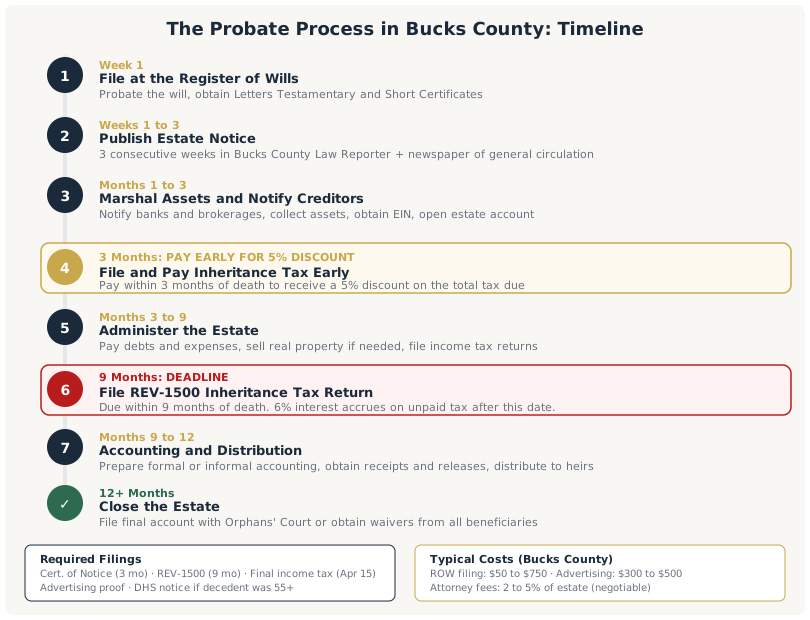
The probate process in Bucks County generally follows these steps:
Present the original will and death certificate to the Register of Wills. Two witnesses must verify the testator's signature, or a self-proving affidavit must be attached. Every filing requires a Certification of Compliance under Administrative Order No. 88.
The Register issues Letters Testamentary (with a will) or Letters of Administration (without). The executor obtains an EIN from the IRS and opens an estate bank account. These letters are the legal authority to act on behalf of the estate.
Pennsylvania law (20 Pa.C.S. § 3162) requires publication of estate notices once a week for three consecutive weeks in the Bucks County Law Reporter and one other local paper. This first complete advertisement triggers the one-year creditor claims limitation period and starts the clock on your liability protection. Separately, within three months, the personal representative must send written notice to all beneficiaries, heirs, and other required parties under Pa.O.C. Rule 10.5.
File a verified inventory of all estate property (Form RW-09) with the Register of Wills. Real estate must be reported at fair market value as of the date of death, not the tax-assessed value. Getting valuations right at this stage prevents problems on the inheritance tax return.
Satisfy valid creditor claims following the statutory priority under 20 Pa.C.S. § 3392, pay final income taxes, and prepare the Pennsylvania Inheritance Tax Return (REV-1500). Consider prepaying within three months to capture the 5% discount.
Due within nine months of death. The REV-1500 must be filed at the Doylestown office, not the Levittown satellite. Errors here trigger deficiency notices and interest.
A Status Report is due two years from death (Pa.O.C. Rule 10.6), then annually until the estate closes. When ready, file a formal accounting with the Orphans' Court or, if all beneficiaries consent, use a Family Settlement Agreement with an informal accounting. The court's decree of distribution authorizes final disbursement to beneficiaries.
Pennsylvania does not legally require an attorney to open or administer an estate. But executors who go it alone frequently encounter problems that create personal liability: missed filing deadlines, inheritance tax errors, improper creditor notification, distributing assets before debts are resolved, or failing to obtain beneficiary receipts and releases. The cost of an attorney is typically far less than the cost of these mistakes. For a sense of typical fees, see How Much Does a Lawyer Cost?
We handle estate administration from initial filing through final distribution. Call 215-949-0888 or request a free consultation.
Statutory content on this page was last verified against Pennsylvania statutes (20 Pa.C.S.; 72 P.S. Art. XXI): February 2026. If you are reading this significantly after that date, confirm key provisions with current statute text or contact our office.