Elder Law & Medicaid Planning
The 5-Year Medicaid Lookback Period
Last updated February 2026
 Marc R. Lynde, Esq.
3 min read
✓ Verified Feb. 2026
Marc R. Lynde, Esq.
This is the rule that catches the most families off guard, and the reason advance planning is essential.
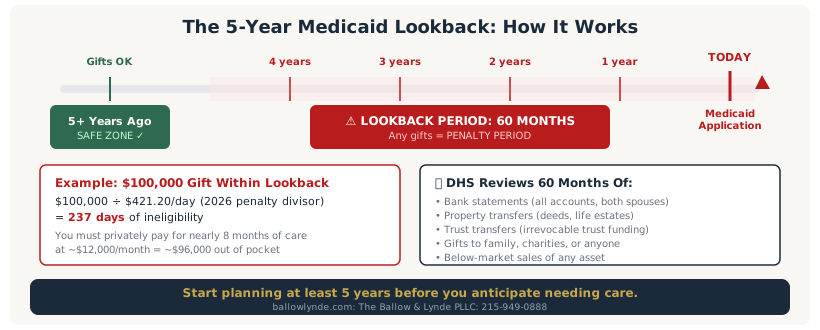
What Is the Lookback?
When you apply for Medicaid long-term care benefits, the Pennsylvania Department of Human Services reviews 60 months (5 years) of financial records for both the applicant and their spouse. They are looking for any assets that were given away, sold below fair market value, or transferred for less than full consideration. The lookback period begins on the date you file the Medicaid application and goes backward 5 years from that date.
Any transfer of assets for less than fair market value during the lookback period creates a transfer penalty, a period of time during which the applicant is ineligible for Medicaid. This includes:
The penalty is calculated by dividing the total value of all non-exempt transfers by the daily transfer penalty divisor. For applications filed in 2026, the divisor is $421.20 per day.
Example: You gifted $50,000 to your children over the past 4 years. When you apply for Medicaid in 2026: $50,000 ÷ $421.20 = 118 days of ineligibility. During those 118 days, you must pay for nursing home care out of pocket at roughly $421 per day, that's approximately $49,700 the family must come up with.
There is no limit to the length of penalty. Large transfers can create penalties of years.
Pennsylvania allows individuals to give up to $500 total per month without triggering a lookback violation. This is a state-specific exception. It does not apply in all states. But it is $500 total, not $500 per recipient.
⚠ The Penalty Starts When You Apply: Not When You Transfer
This is critical. The penalty period begins running on the date of the Medicaid application, not the date the transfer was made. This means if you gave money away 3 years ago and apply for Medicaid today, you face a penalty now: when you actually need nursing care and can't pay for it. This is why lookback violations are so costly.
Statutory content on this page was last verified against Pennsylvania statutes (20 Pa.C.S.) and DHS regulations (55 Pa. Code): February 2026. If you are reading this significantly after that date, confirm key provisions with current statute text or contact our office.
Free consultations available for most practice areas.
Book a Free Consultation Or call 215-949-0888